

Translational insights to de-risk drug development
VitroScan integrates ex vivo micro‑tumor testing into a comprehensive solution that de‑risks drug development and accelerates the translation of new therapies into clinically relevant treatment options.
Therapeutics for micro-tumor testing


Ex vivo micro-tumor testing: A More Predictive Platform for Drug Development
VitroScan’s ex vivo micro-tumor platform preserves the native architecture, cellular diversity, and stromal interactions of patient tumor tissue. Cultured in a physiologically relevant 3D environment, these patient-derived models more closely reflect real disease biology than conventional assays. By preserving tumor heterogeneity and the tumor microenvironment (TME), the platform enables near-clinical testing and modeling of patient-specific treatment responses. As a new approach methodology (NAM), it provides insights that better reflect the diversity of the real-world patient population.
The platform helps drug developers to:
- Predict clinical responses with greater confidence
- Evaluate drug efficacy in representative patient tissue
- Test combination strategies simultaneously
- Generate translational insights under conditions that closely mirror tumors in situ
By delivering more clinically relevant data earlier, VitroScan can improve candidate selection, inform treatment strategies, and reduce risk across the drug-development pipeline.
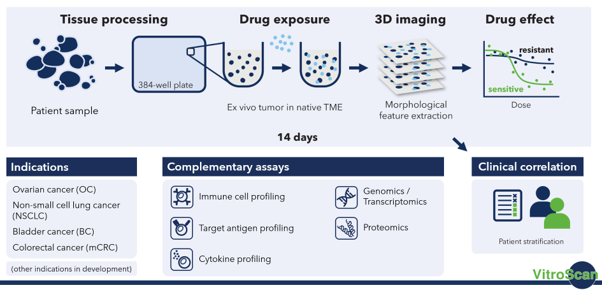
Bridging the Gap Between Preclinical Models and Patients
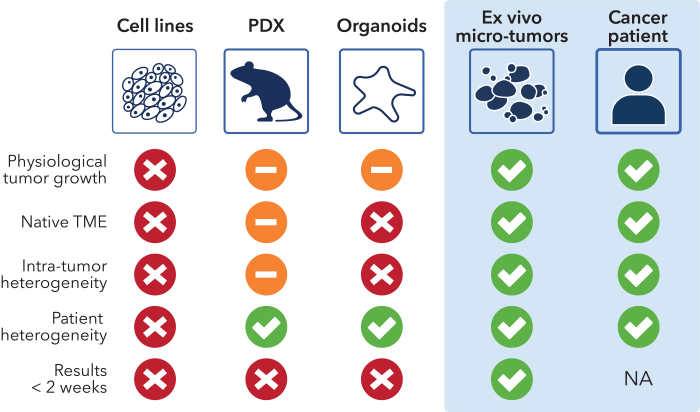
Unlike conventional cell lines, organoids, and patient-derived xenografts, VitroScan’s ex vivo micro-tumors combine physiological tumor growth with preservation of the native tumor microenvironment, intra-tumor diversity, and patient-to-patient heterogeneity. While other models reproduce only selected aspects of tumor biology and often require lengthy studies, VitroScan delivers comprehensive, patient-relevant drug-response data in under two weeks. This unique combination of biological fidelity and speed provides a practical bridge between preclinical testing and clinical outcomes, enabling faster, better-informed drug-development decisions.
Info Sheets
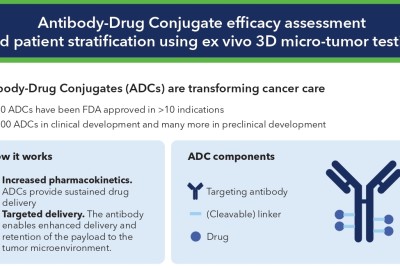
Read more Info Sheet ADC efficacy assessment
1 June 2026
Download our Info sheet on ADC efficacy assessment in VitroScan's ex vivo micro-tumor platform
Read more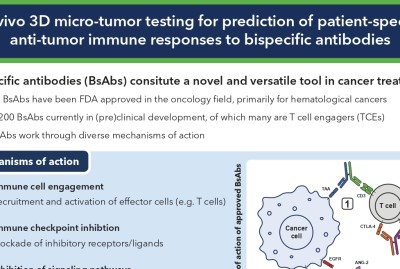
Read more Info Sheet Bispecific antibody testing
1 June 2026
Download our Info sheet on bispecific antibody efficacy assessment in VitroScan's ex vivo micro-tumor platform
Read more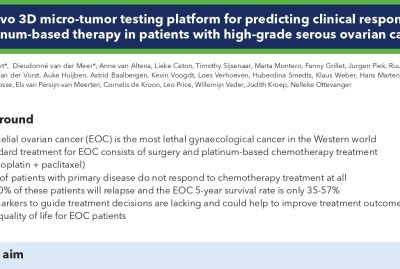
Read more Our latest publication at a glance!
1 June 2026
Download our Info sheet on the latest VitroScan publication highlighting the predictive value of our platform
Read more