
The Translational Readout #2 - Tumor Heterogeneity: Why Treatment Responses Differ
8 September 2026
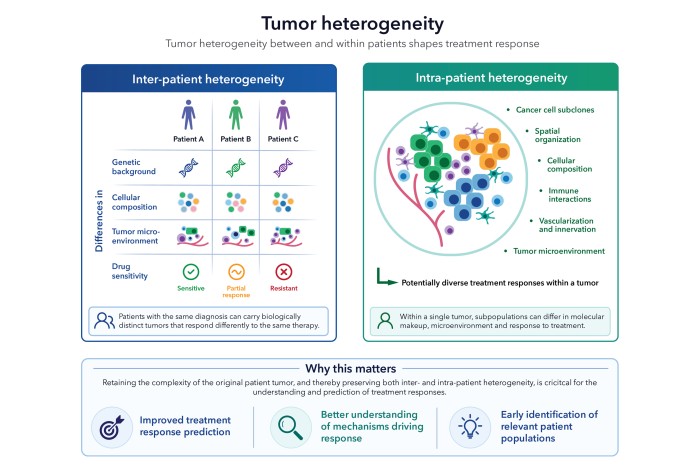
Tumors of the same diagnosis can differ substantially in their biology. The same treatment may therefore work differently between patients – and even across cells within a single tumor.
Between patients, tumors of the same diagnosis can differ in their genetics, cellular composition, microenvironment and drug sensitivity, resulting in distinct responses to the same therapy. Within a tumor, diverse cell populations may also respond differently: some may be sensitive, while others survive and drive therapy resistance or relapse. Approaches that reduce tumors to a single biomarker or average response therefore risk missing this clinically-relevant complexity.
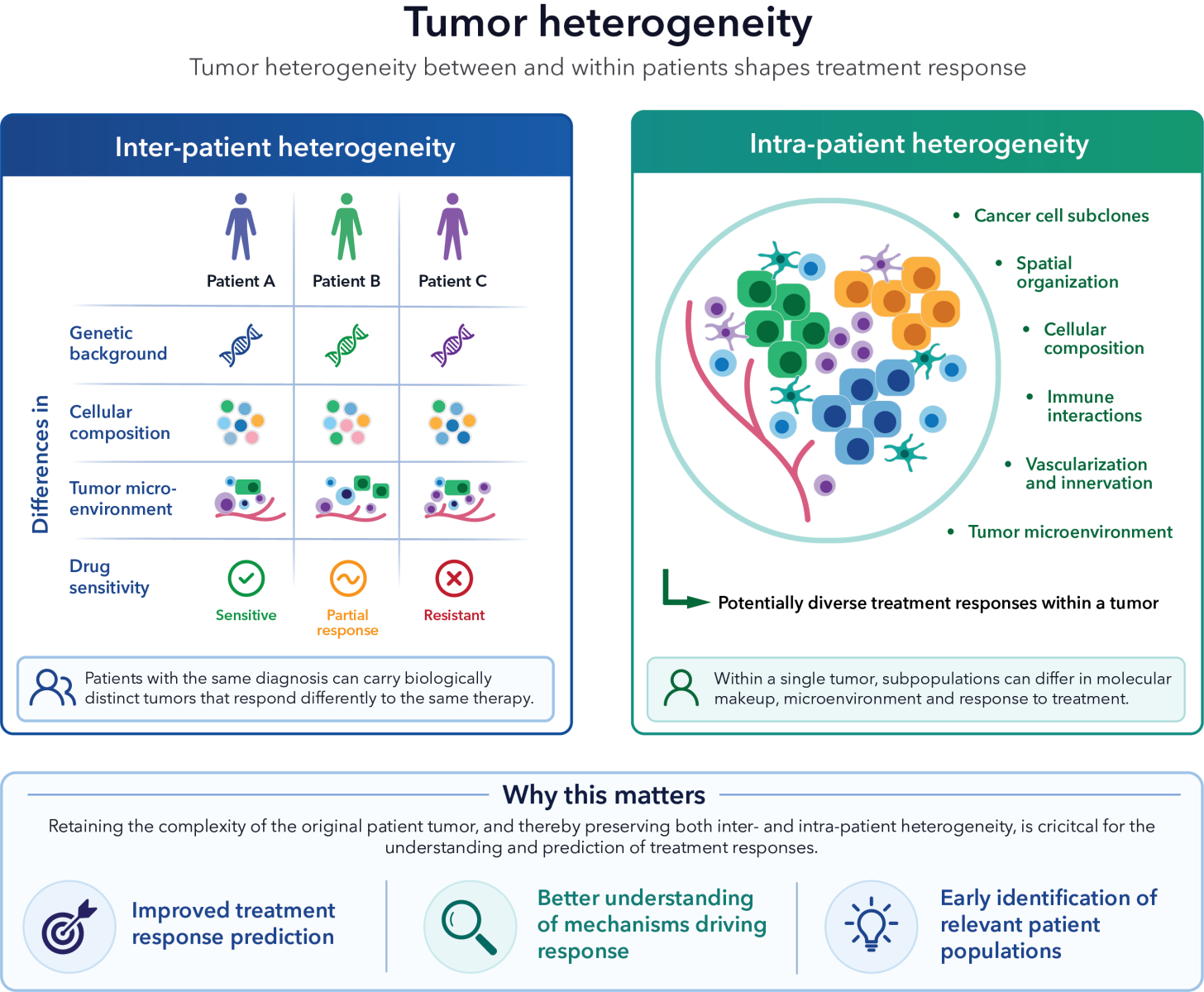
Why this matters. For clinicians, tumor heterogeneity can help explain why a treatment benefits some patients but not others. For drug developers, it presents both a challenge and an opportunity. An average response may be driven by a small subgroup, while resistant populations remain undetected. Conversely, an active drug may fail to demonstrate clinical benefit in a broad trial if the patients most likely to respond are not identified beforehand.
One example is mirvetuximab soravtansine (MIRV), a FRα-targeting antibody-drug conjugate. The first phase III trial (FORWARD I) of MIRV in platinum-resistant ovarian cancer did not meet its primary endpoint when patients with widely varying FRα expression were grouped together. Refining patient selection to FRα-high tumors subsequently revealed a clear survival benefit (MIRASOL trial).
Preserving the complexity of the original tumor. VitroScan’s ex vivo micro-tumor platform retains the cellular composition and microenvironment of the original patient tumor. Instead of selecting for the cells that grow most readily in culture, the platform aims to preserve both patient-to-patient variation and distinct populations within the tumor. By retaining this complexity, functional testing can reveal differences in treatment response that averaged or simplified models may miss.
From the field
Targeting diverse RAS-driven tumors. The FDA recently approved daraxonrasib for metastatic pancreatic adenocarcinoma. By inhibiting multiple RAS variants, the drug may help address genetic heterogeneity that has complicated RAS-targeted treatment. Read more
Heterogeneity drives resistance. A recent review describes how genetic, cellular and microenviron-mental differences develop and jointly shape treatment response and resistance. Read the review
Looking ahead. In the next Translational Readout, we explore the potential of ex vivo micro-tumor testing to predict treatment responses in bladder cancer.
Interested in exploring how patient-derived ex vivo micro-tumor testing could support your translational research program? Get in touch with our scientific team via the contact page.