
The Translational Readout #3 - New Publication: Ex Vivo Micro-Tumor Responses Reflect Chemotherapy Outcomes in Bladder Cancer
21 October 2026
Which patients with bladder cancer will benefit from chemotherapy? Treatment decisions are often made without a reliable way to predict an individual tumor’s response. In a new study with Erasmus MC and four other Dutch hospitals, we show that fresh tumor tissue can be tested ex vivo to predict clinical treatment responses.
Testing fresh tissue within a clinical timeframe. The prospective study enrolled 65 patients with non-muscle-invasive or muscle-invasive bladder cancer. Tumor tissue was collected during routine clinical procedures. The isolated micro-tumors were exposed to anticancer drugs, and drug-induced changes in micro-tumor viability and morphology were quantified using 3D imaging. Testing succeeded for 48 patients (74%), with every result being generated within 14 days of tissue collection. Response profiles differed markedly between patients for the treatments tested, which included chemotherapies and the antibody drug conjugate enfortumab vedotin.
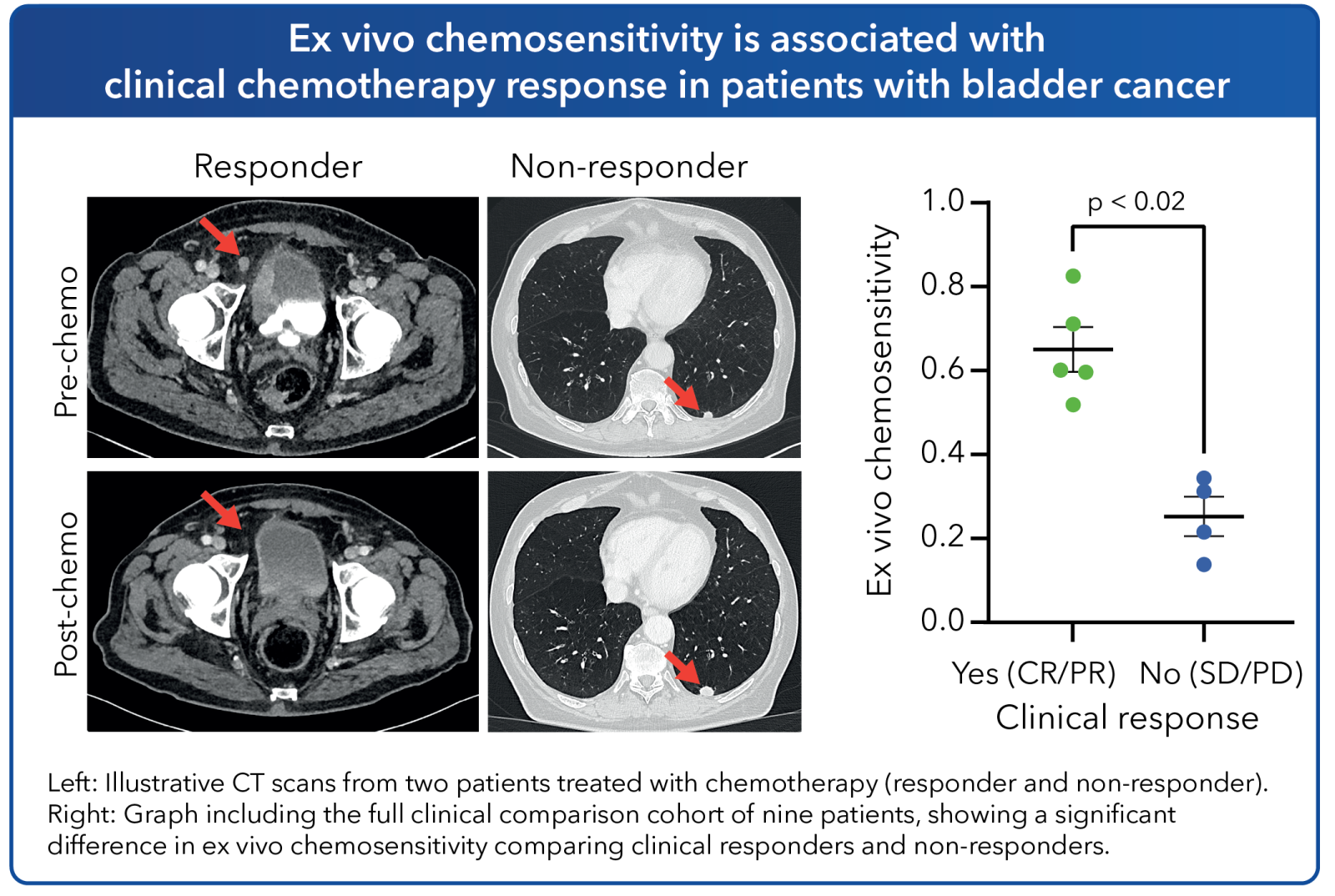
Connecting laboratory and clinical response. Nine patients had both a successful ex vivo test and an evaluable outcome after platinum-based chemotherapy. Clinical responders had markedly higher ex vivo chemosensitivity scores than nonresponders (see figure above). Although the clinical cohort is small and larger prospective studies are needed, the results provide an encouraging first link between drug responses measured in fresh tumor tissue and the response observed in patients.
From patient response to translational insight. Identifying which patients are most likely to benefit remains a major challenge in drug development. Ex vivo testing of patient-derived micro-tumors measures drug response directly in human tumor tissue, integrating the many factors shaping response into a single functional readout. Together with our earlier study linking ex vivo and clinical responses in ovarian cancer (Koedoot et al, npj Precision Oncology, 2025), these findings suggest that such measurements can reflect patient response across tumor types. Combined with molecular and clinical data, functional results could help define responsive populations and focus development on the patients most likely to benefit.
Read the paper: Scholtes et al., European Urology Open Science (2026)